Stinging insect nest abatement targets colonial wasps and hornets that construct papier-mâché envelopes or underground galleries across Wake County properties. In mature wooded neighborhoods like Five Points, Mordecai,…
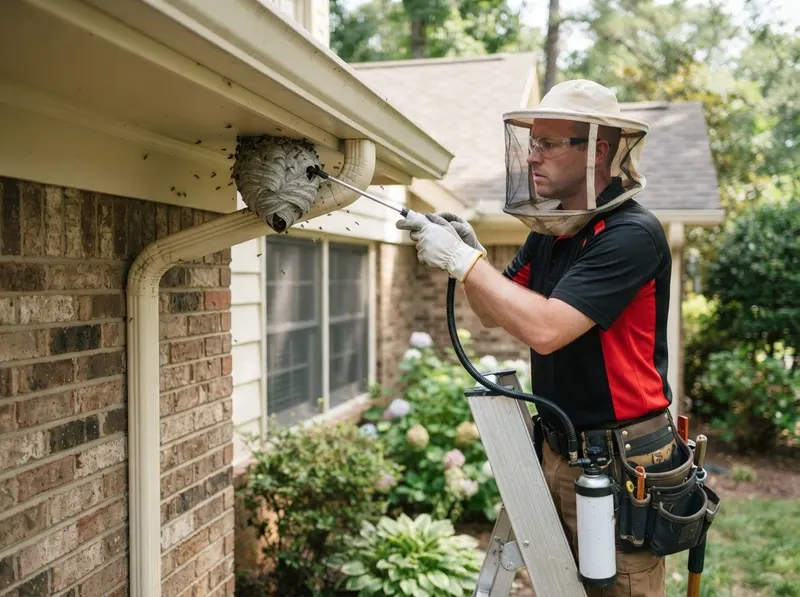
Stinging insect nest abatement targets colonial wasps and hornets that construct papier-mâché envelopes or underground galleries across Wake County properties. In mature wooded neighborhoods like Five Points, Mordecai, and Historic Oakwood, mature loblolly pines and historic soffits provide ideal anchoring sites for aerial hornets and European hornets. A store-bought can of pyrethroid spray shoots up to 20 feet but rarely penetrates the multi-layered wood-pulp envelope of a football-sized bald-faced hornet nest. Surface-spraying simply triggers an alarm pheromone response that releases dozens of reproductive defenders into the immediate perimeter. Independent biological abatement uses targeted direct micro-dust injection or specialized systemic freezing agents directly into the brood core, killing the queen and larvae instantly before physical nest detachment occurs.
Ground-nesting eastern yellowjackets present a distinct mechanical challenge across clay-heavy soils in North Hills, Hedingham, and Wakefield. These colonies frequently colonize abandoned eastern chipmunk burrows, root rot voids beneath azaleas, or landscape railroad ties. If a ground entrance is plugged prematurely with expanding foam or soil, the worker caste chews through adjacent drywall or crawlspace subflooring into interior rooms. Subterranean abatement requires locating primary and secondary transit tunnels, executing pressurized non-repellent dust injection to eliminate the returning foraging force, and excavating the comb structure. When nests penetrate brick weep holes or wall voids in Cameron Village or Brier Creek homes, acoustic detection and thermal tracing map the exact wall cavity before applying targeted directional treatments that eliminate the colony without unnecessary drywall demolition.
Paper wasps (Polistes) construct open, hexagonal combs under porch ceilings, deck rails, and garage eves in Glenwood South and Boylan Heights. While less defensive than yellowjackets, open-comb colonies harbor between 20 and 75 individuals that sting repeatedly when outdoor living spaces are disturbed. Comprehensive abatement cleanses these contact zones and applies a microencapsulated botanical or synthetic pyrethroid repellent directly to the architectural junction, terminating the chemical scent markers that cause queens to rebuild in the identical roof eve each subsequent spring season.
Every job gets a firm, written price after a free on-site visit.
Tell us about your stinging insect nest abatement job in Raleigh and we'll send a clear, written quote, usually the same day.
 Carolina Fox Pest Control