Finding a reliable pest control service near me requires moving past cosmetic chemical spraying to address the structural biology of local residential infestations. Wake County properties face distinct environmental pressures, from subterranean termite swarms along moist foundation footings to roof rat runs inside mature pine canopies near William B.
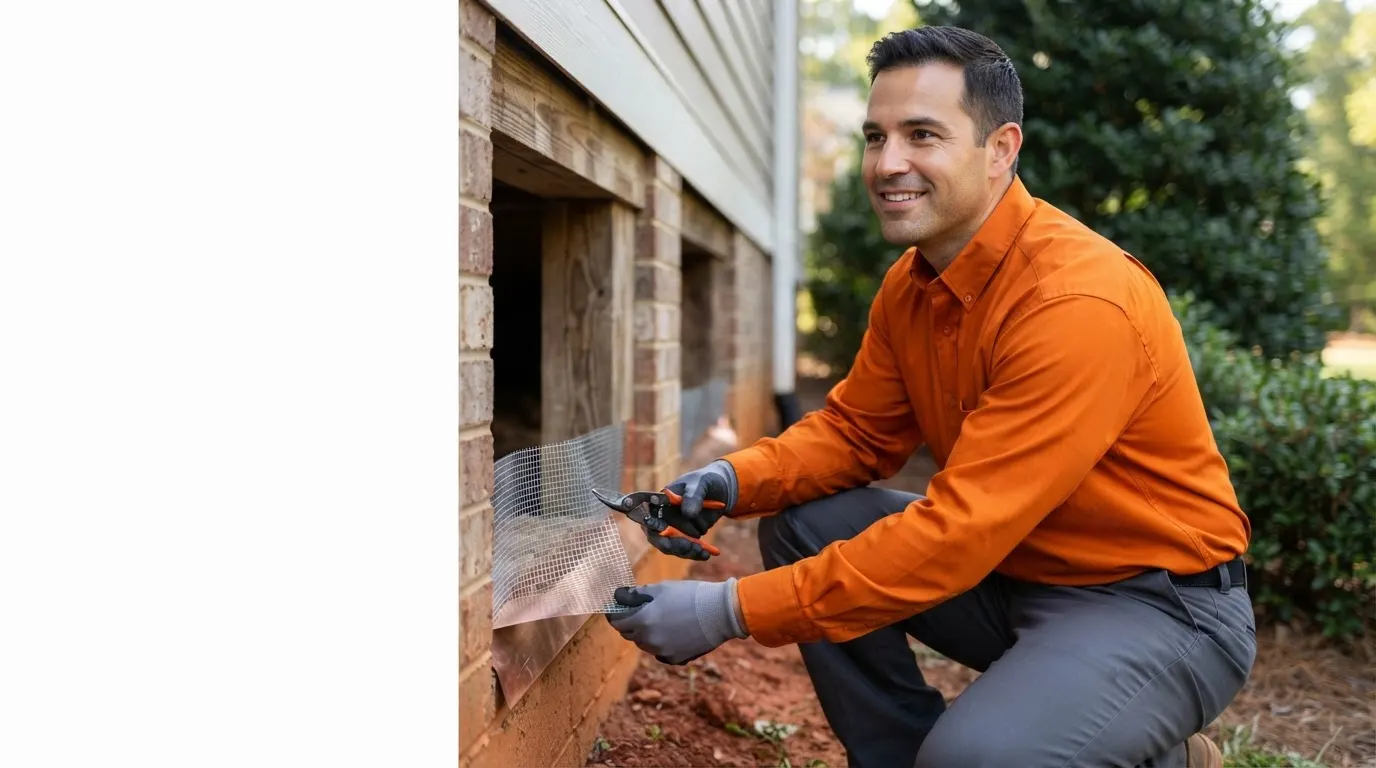
Pest Control Service in Raleigh is a specialized biological management and structural exclusion discipline that neutralizes active insect and vertebrate populations while sealing envelope entry points across Wake County properties.
Every service reflects the same meticulous attention to detail, whether it's a single job or a larger pest control service project across Raleigh.
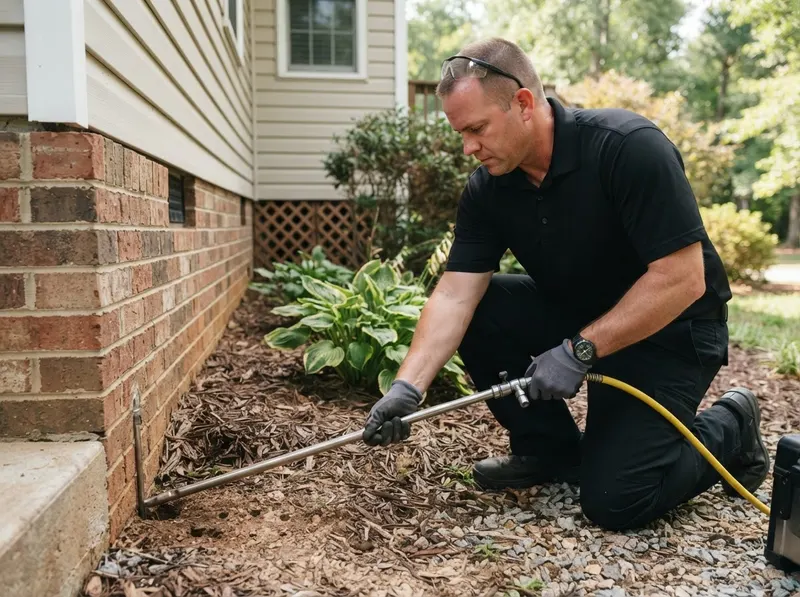
Subterranean termites (Reticulitermes flavipes) move through shelter tubes out of moist Raleigh clay to attack structural sills and floor joists. Eradication applies liquid non-repellent termiticides through calibrated trenching and soil rodding along exterior stem walls, supplemented by in-ground monitoring stations that deliver insect growth regulators back to subterranean colonies. Technicians mechanically dig continuous four-inch-wide trenches along all slab perimeters, ensuring the chemical binds directly with the dense subsoil to form an uninterrupted subterranean protective zone. Treatment protocols protect structural footings, subfloor timbers, and sill plates from hidden hollow-tunnel feeding damage throughout multi-year seasonal swarms.
Get a quote →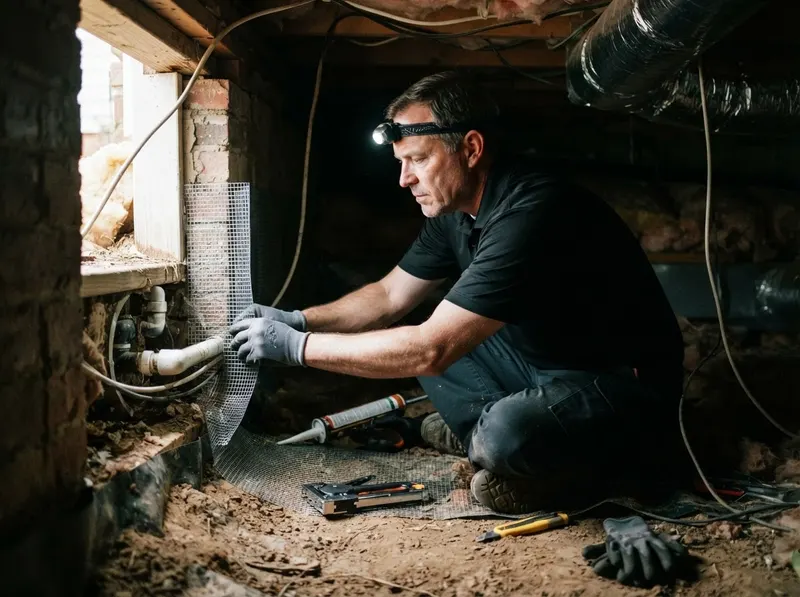
Roof rats and Norway rats exploit foundation vents, unsealed plumbing penetrations, and AC line-set chaseways to infiltrate floor systems. Exclusion mechanics utilize heavy-gauge galvanized hardware mesh, custom chimney-flashing barriers, and structural polyurethanes to seal envelope gaps down to one-quarter inch, cutting off indoor attic nesting runs permanently. Crews inspect perimeter mudsills, sill-plate corners, crawlspace crawl-doors, and weep screeds to verify physical envelope integrity before laying tamper-resistant interior snap networks. Eliminating mechanical access stops destructive electrical insulation gnawing, structural beam degradation, and foul urinary scent trails without saturating accessible crawlspace airspaces with hazardous dusts.
Get a quote →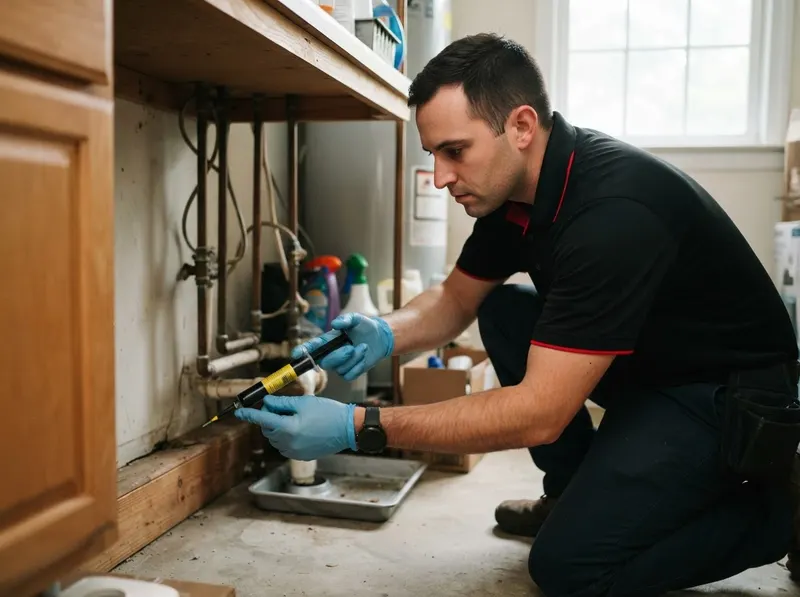
Treatments distinguish between perimeter smokybrown or American roaches entering from pine straw bedding and invasive German cockroaches nesting inside warm appliance voids. Micro-gel baiting systems, insect growth regulators (IGRs), and precision void-injection dusts eliminate populations at their breeding harborages without residual surface drift across living rooms or food prep surfaces. Application targets refrigerator motor compressors, hollow cabinet framework, sub-countertop hinges, and vertical utility pipe chases where high humidity mirrors preferred nesting microclimates. By targeting reproductive juvenile populations and disrupting chitin formation, colonies collapse systematically within two to three life cycles while maintaining food-safe conditions.
Get a quote →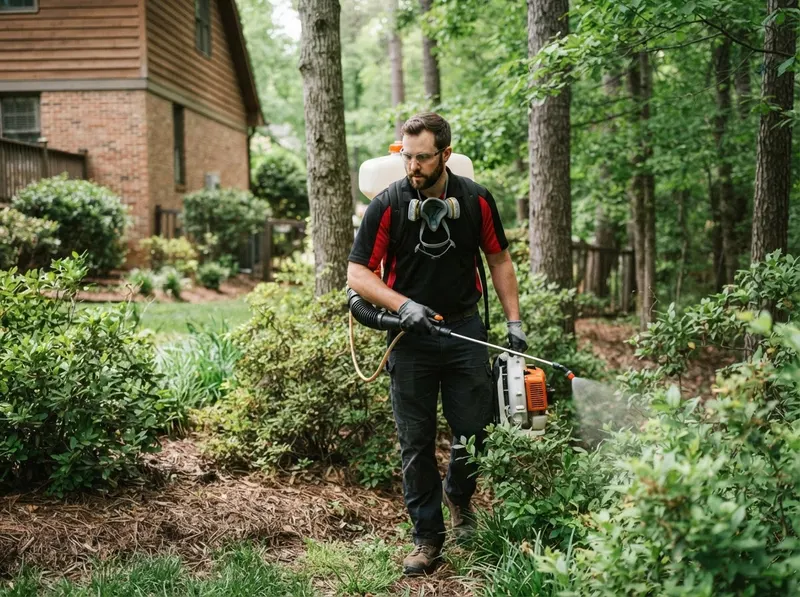
Mosquitoes (Aedes albopictus) and blacklegged ticks breed inside the dense ornamental foliage and damp deciduous leaf litter common to Wake County properties. Directed mist applications target the undersides of broadleaf canopies, structural perimeter shrubbery, and ground cover zones where adult populations rest, breaking reproduction cycles from April through September. Biological larvicides are integrated directly into standing retention ponds, drainage basins, and low-lying landscape swales to eliminate aquatic pupae before adult emergence occurs. Treatment schedules remain calibrated around seasonal ambient rainfall, ensuring outdoor recreational turf areas and open-air patios remain habitable without disrupting non-target pollinator flights during morning hours.
Get a quote →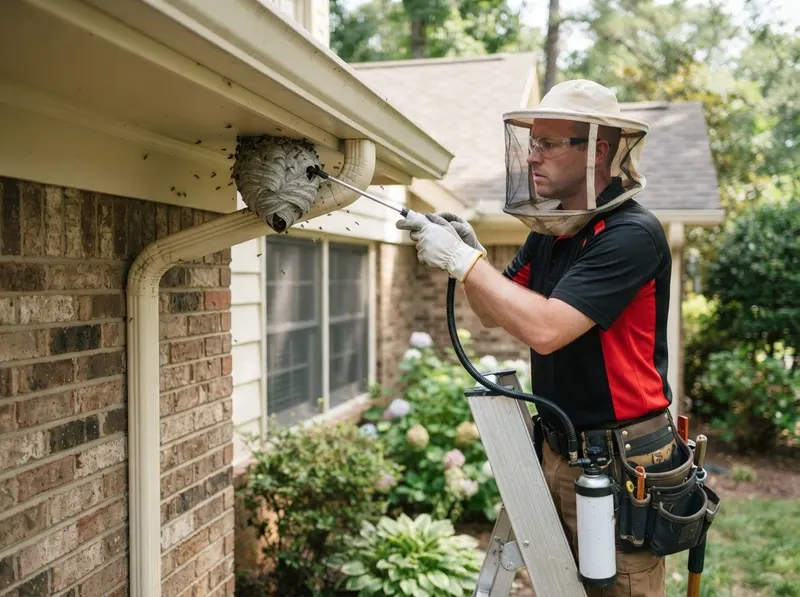
Paper wasps, yellowjackets, and bald-faced hornets build aggressive colonies beneath roof overhangs, window header flashings, and ground-level landscape timbers. Direct residual void treatments and pressurized aerosol applications neutralize defending swarms instantly before physical nest extraction clears the architectural overhangs and porch soffits. Subterranean yellowjacket cavities hidden in lawn turf or landscape root networks receive pressurized insecticidal injections that penetrate deep into subterranean gallery networks, neutralizing brood chambers completely. Following elimination, localized hydrophobic repellent sprays are applied to the anchoring substrate, discouraging returning fertile queens from constructing satellite combs along eaves and second-story dormers.
Get a quote →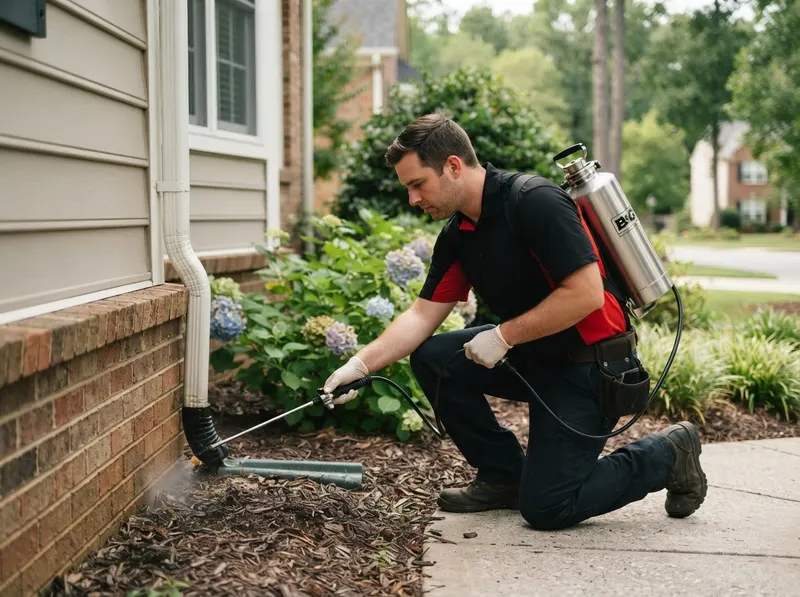
A structured preventative protocol establishes a multi-layer defense line extending three feet up the foundation wall and six feet outward across garden mulch beds. Formulated water-resistant microencapsulated suspensions resist high summer humidity and torrential downpours, repelling centipedes, earwigs, and fire ants before they access sill plates. Technicians mechanically brush eaves, clear spider web aggregations from corner soffits, and disperse granular repellents across moist exterior mulch rings to prevent foundational migration. Every 90-day cycle recalibrates chemistries to anticipate seasonal pest evolutions, providing ongoing exterior protection while avoiding interior chemical residue throughout residential living spaces.
Get a quote →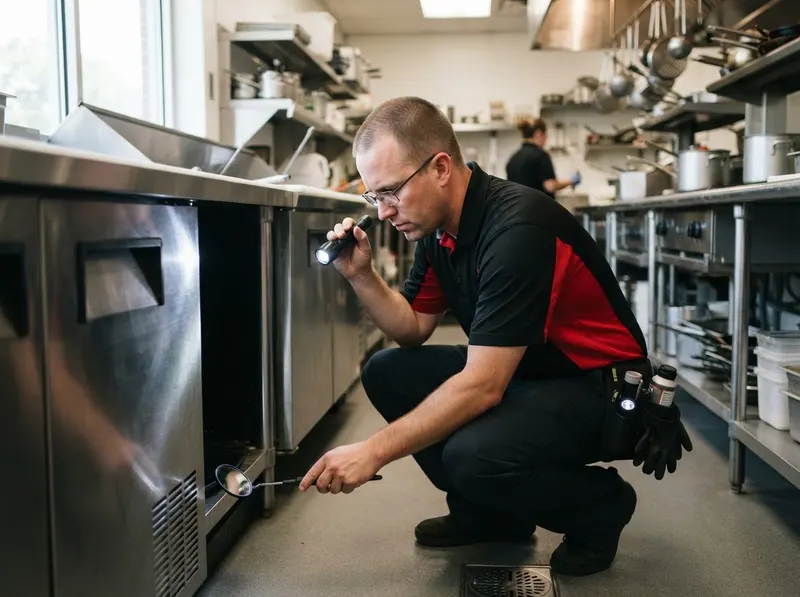
Commercial dining operations require regulatory compliance and documented IPM monitoring logs for Wake County environmental health inspections. Implementation places discrete insect light traps, locked bait stations, and micro-gel formulations along kitchen floor drains, food staging machinery, and back-dock delivery portals to ensure zero inventory contamination. Bar-line drains and grease interceptor pits are treated with bacterial bio-enzymatic foams that digest gelatinous organic scum, eradicating drain fly breeding zones at their source. Comprehensive digital reporting tracks harborage densities, structural sanitation gaps, and facility structural deficiencies to satisfy commercial inspection standards while safeguarding daily business operations.
Get a quote →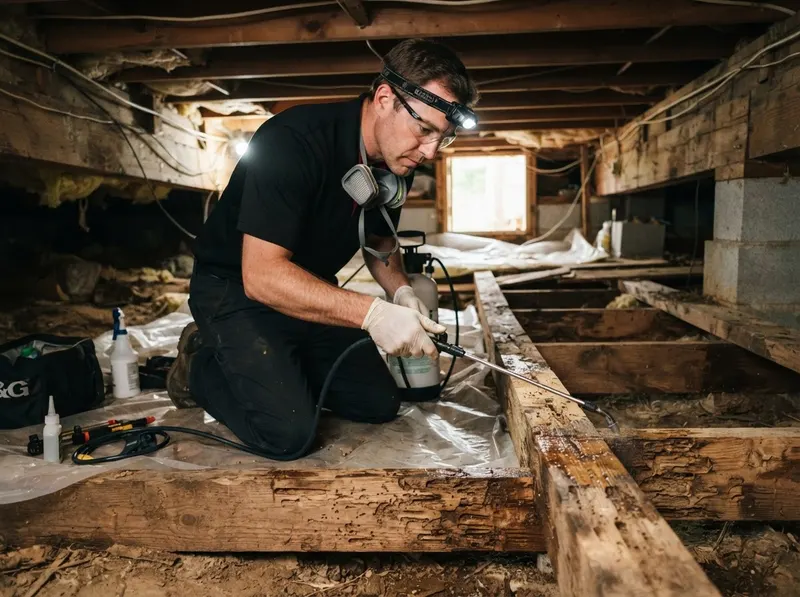
Powderpost beetles (Lyctinae) deposit eggs within unsealed subflooring and damp crawlspace framing across older residential neighborhoods. Remediation requires direct structural penetrations using deep-acting disodium octaborate tetrahydrate solutions to penetrate raw timbers, arresting active wood larvae tunneling and preventing structural floor sag. Certified technicians measure ambient timber moisture levels across crawlspace bays before applying pressurized deep-penetrating borate mists that crystallize within the cellular wood structure. This non-volatile mineral salt barrier remains locked within the cellulose fibers permanently, poisoning wood-ingesting larvae upon emergence and stabilizing subfloor floor integrity across historic homes.
Get a quote →You get a firm, itemized quote for your pest control service before any work begins, no surprises, no pressure.
Careful prep, tidy work, and a full cleanup when we are done. We treat your home and belongings like our own.
The same trusted, background-checked team from the first call to the final check.
If dealing with subterranean termites or wood-destroying beetles, select an exterior liquid trench barrier or localized bait network; if tackling roof rats, Norway rats, or house mice, choose mechanical exclusion and crawlspace sealing. Liquid barrier applications provide immediate soil saturation around monolithic slabs or stem walls but require continuous subterranean depth, whereas structural rodent exclusion addresses physical gaps larger than one-quarter inch at rooflines and crawlspaces. Choosing broad exterior perimeter barriers manages seasonal outdoor invaders like American roaches and brown marmorated stink bugs without indoor chemical exposure, though it will not resolve an established interior German cockroach breeding nest in a kitchen cabinet void.
For active wood rot or fungus-gnat propagation linked to persistent moisture in older foundations, an interior void remediation combined with crawlspace encapsulation fits far better than perimeter granular applications. Conversely, properties bordering protected parklands or greenways require targeted wildlife and rodent exterior barrier traps to halt heavy re-infestation corridors from natural reserves before addressing cosmetic interior problems. The trade-off between exterior bait stations and localized structural repair comes down to long-term prevention versus immediate structural defense: passive baiting monitors territorial activity over rolling quarter-cycles, while physical exclusion stops active attic wall scratching and gnawed wiring immediately by eliminating mechanical passage.
Every project gets a firm, written price after a free on-site visit. Ranges below for orientation.
Tell us about your pest control service job and we'll send a clear, written quote, usually the same day. Or just call and talk to a real Raleigh pro.
(984) 742-7042
Properties across Raleigh sit atop dense, iron-rich Cecil soil, an acidic red clay that retains heavy subterranean moisture after spring downpours and drives Reticulitermes termite swarms out of natural pine corridors toward foundation footings. Older framing in Mordecai, Boylan Heights, and historic Oakwood features unencapsulated crawlspaces that create thermal chimney effects, pulling exterior humidity and wood-boring insects directly upward into joists. Farther north, the dense hardwood tree canopies surrounding William B. Umstead State Park and Brier Creek support elevated roof rat corridors that jump straight to asphalt shingle rooflines, requiring heavy-gauge hardware cloth exclusions at ridgecaps and soffit intersections rather than basic ground-level traps. Across established communities like North Hills and Five Points, aging clay sewer laterals and expansive landscape irrigation systems establish continuous subterranean water reservoirs, cultivating massive smokybrown cockroach and American cockroach populations that migrate indoors through weep holes when summer temperatures top 90 degrees Fahrenheit. Wake County's prolonged hot and humid summers, stretching from late April into early October, also stimulate extreme activity in damp basement transitions, causing pervasive silverfish infestations among cardboard storage and finished wood shelving unless moisture mitigation is coupled with tactical exclusion.
Free estimates for Raleigh & the surrounding area.
 Carolina Fox Pest Control