Bed bug thermal and chemical eradication in Raleigh relies on physiological desiccation combined with targeted contact chemistry. Heat convection systems elevate room air to 122°F, 135°F using industrial diesel or…
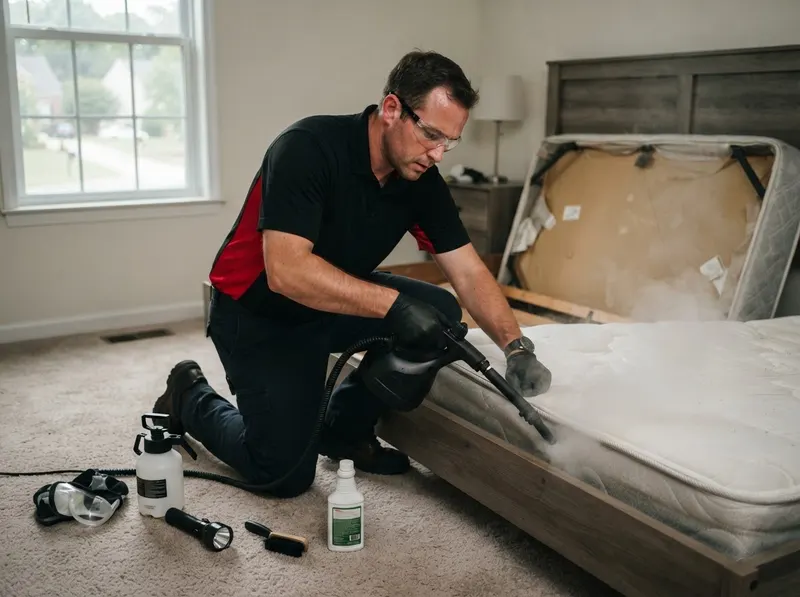
Bed bug thermal and chemical eradication in Raleigh relies on physiological desiccation combined with targeted contact chemistry. Heat convection systems elevate room air to 122°F, 135°F using industrial diesel or electric generators, forcing ambient heat into wall voids, mattress seams, and structural baseboards where standard aerosol repellents fail to penetrate. At 118°F, adult bed bugs die within 90 minutes; at 122°F, bed bug eggs suffer irreversible protein coagulation immediately. The chemical component utilizes microencapsulated non-repellent insecticides along subfloors, trim, and crawlspace perimeters. This secondary residual barrier intercepts nymphs hatching from hidden structural voids that ambient airflow could not saturate.
Selecting hybrid thermal and chemical eradication over standalone chemical spraying balances speed against structural penetration. A purely chemical approach requires three to four successive visits spanning 30 to 45 days to eliminate emerging nymphs as egg casings hatch. Thermal eradication eliminates entire colonies within eight hours, though structural materials such as pressurized plumbing or synthetic vinyl trim require careful thermal monitoring. Properties with heavy clutter or historical lathe-and-plaster walls, such as those in Mordecai, Oakwood, and Boylan Heights, benefit from thermal convection because hot air naturally diffuses into insulation pockets without saturating wood surfaces with wet chemical sprays.
Local housing architecture throughout Wake County dictates treatment deployment. Slab-on-grade homes common in Brier Creek and Wakefield trap heat effectively, reducing the burn time needed to achieve core thermal penetration. In contrast, older pier-and-beam properties near Glenwood South and Five Points lose ambient temperature through open crawlspaces, requiring temporary perimeter canvas skirting and auxiliary blowers to maintain required lethal temperatures. Modern multi-family units in North Hills and the Village District require simultaneous void treatments along shared plumbing runs to prevent lateral bug migration into adjoining units during the heating cycle.
Every job gets a firm, written price after a free on-site visit.
Tell us about your bed bug thermal and chemical eradication job in Raleigh and we'll send a clear, written quote, usually the same day.
 Carolina Fox Pest Control