Commercial kitchen sanitation audits identify structural vulnerabilities that surface chemical treatments fail to resolve. Facilities along Glenwood South and Cameron Village often operate inside retrofitted heritage…
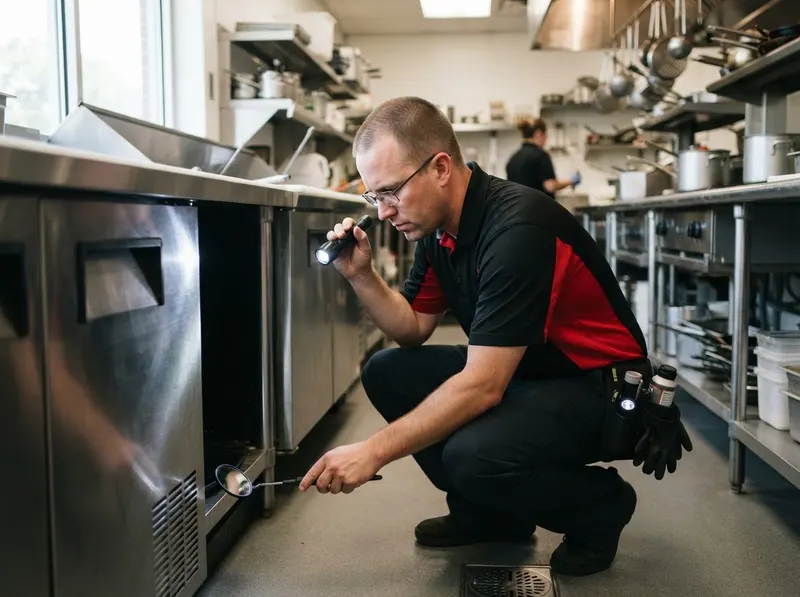
Commercial kitchen sanitation audits identify structural vulnerabilities that surface chemical treatments fail to resolve. Facilities along Glenwood South and Cameron Village often operate inside retrofitted heritage envelopes where utility penetrations behind line equipment create open migration corridors for Blattella germanica. Chemical applications merely scatter these colonies into drop ceilings or motor housings. A mechanical audit isolates moisture levels along quarry tile grout lines, hollow stainless steel appliance legs, and unsealed dish machine conduits, matching specific physical conditions to pest reproduction cycles.
Food prep footprints in dense hospitality pockets like Five Points, North Hills, and Brier Creek face chronic rodent pressure through high-volume loading bays and shared trash compactors. Roof rats exploit vertical conduit runs between drop ceilings and exterior brick vents, bypassing standard perimeter bait stations. The diagnostic process inspects rubber compression gaskets on walk-in coolers, floor sink air gaps, and ceiling expansion joints to map physical entry boundaries. If a facility shows sub-slab settlement or grease build-up exceeding 0.125 inches inside drain bells, physical exclusion and enzymatic biofilm elimination replace baseboard residual spraying to permanently break breeding conditions.
Every job gets a firm, written price after a free on-site visit.
Tell us about your commercial kitchen sanitation and pest audits job in Raleigh and we'll send a clear, written quote, usually the same day.
 Carolina Fox Pest Control